By Line Debaveye (VLIZ)
How does a dune respond to an extreme storm? How much water overtops a coastal defence during severe wave conditions? And how does dune vegetation contribute to reducing erosion? These are questions that cannot easily be answered by just visiting the field we research. Instead, the Horizon Europe project DuneFront investigates these processes in highly controlled laboratory environments using large-scale wave flumes.
DuneFront brings together researchers from across Europe to develop and validate innovative Dune-by-Dike Nature-based Solutions. These are hybrid coastal defence systems that combine the resilience of natural dunes with the reliability of engineered infrastructure. To better understand how these systems perform under different conditions, the project relies on three complementary wave flume facilities. Each one focuses on a different aspect of the complex interaction between waves, sand, vegetation and coastal protection.
Antwerp: Simulating extreme storms and sand dynamics
At the wave flume of Flanders Hydraulics in Antwerp (Belgium), researchers recreate extreme storm conditions to investigate how coastal sand behaves when exposed to severe wave impact and elevated water levels.
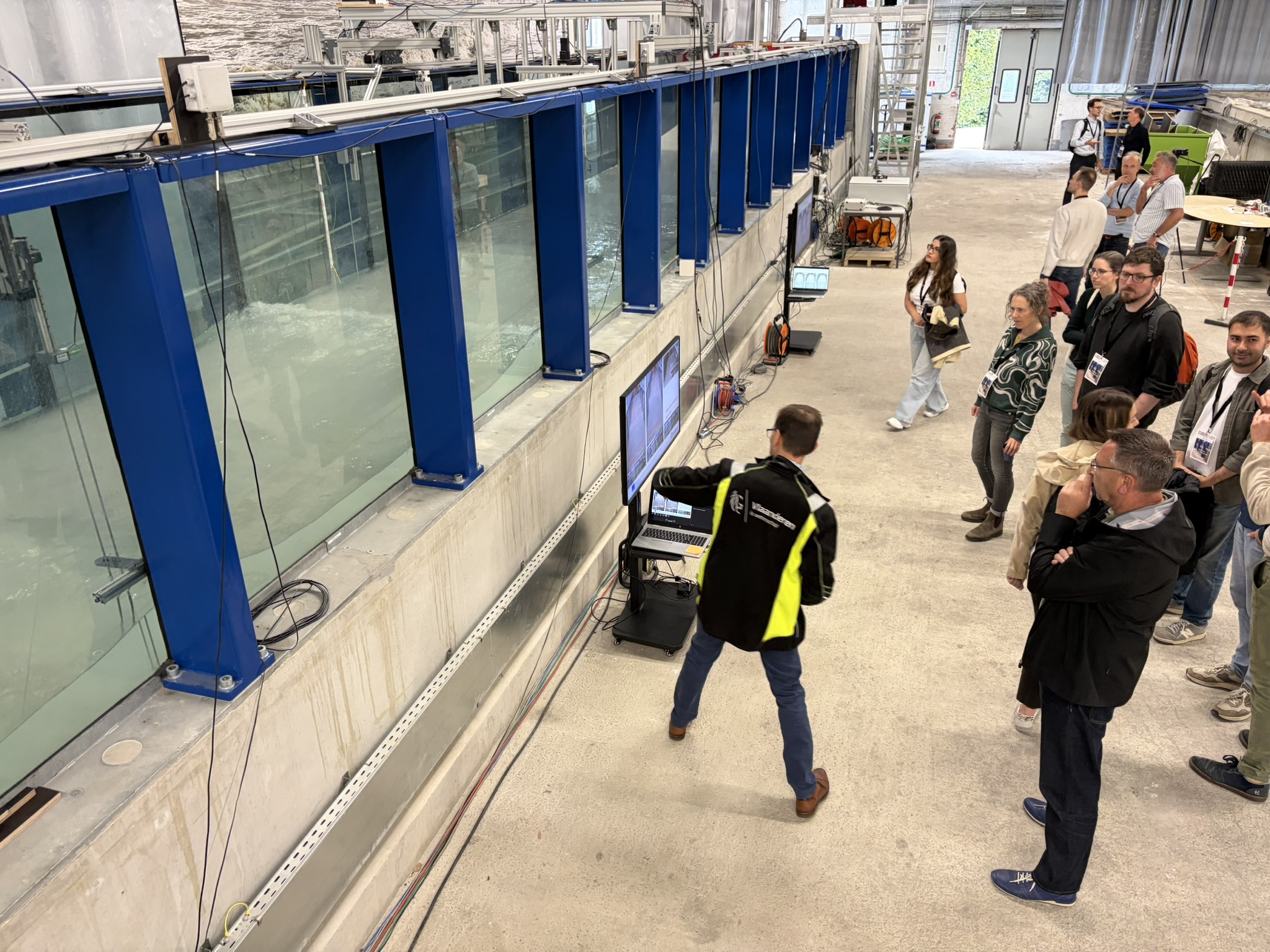
The experiments focus on sediment dynamics: how sand is eroded, transported and deposited during storm events. By carefully monitoring these processes, researchers gain valuable insights into dune erosion and recovery, improving our understanding of how natural coastal systems behave during extreme weather. These findings are essential for predicting the long-term resilience of dune-based coastal defences.
Delft: Wave action and wave overtopping
At Delft University of Technology (The Netherlands), the focus shifts to the interaction between waves and hybrid dune-dike systems. Here, researchers study how incoming waves propagate towards a fixed coastal defence (e.g. a dike) and how much water overtops the structure under different hydraulic conditions.
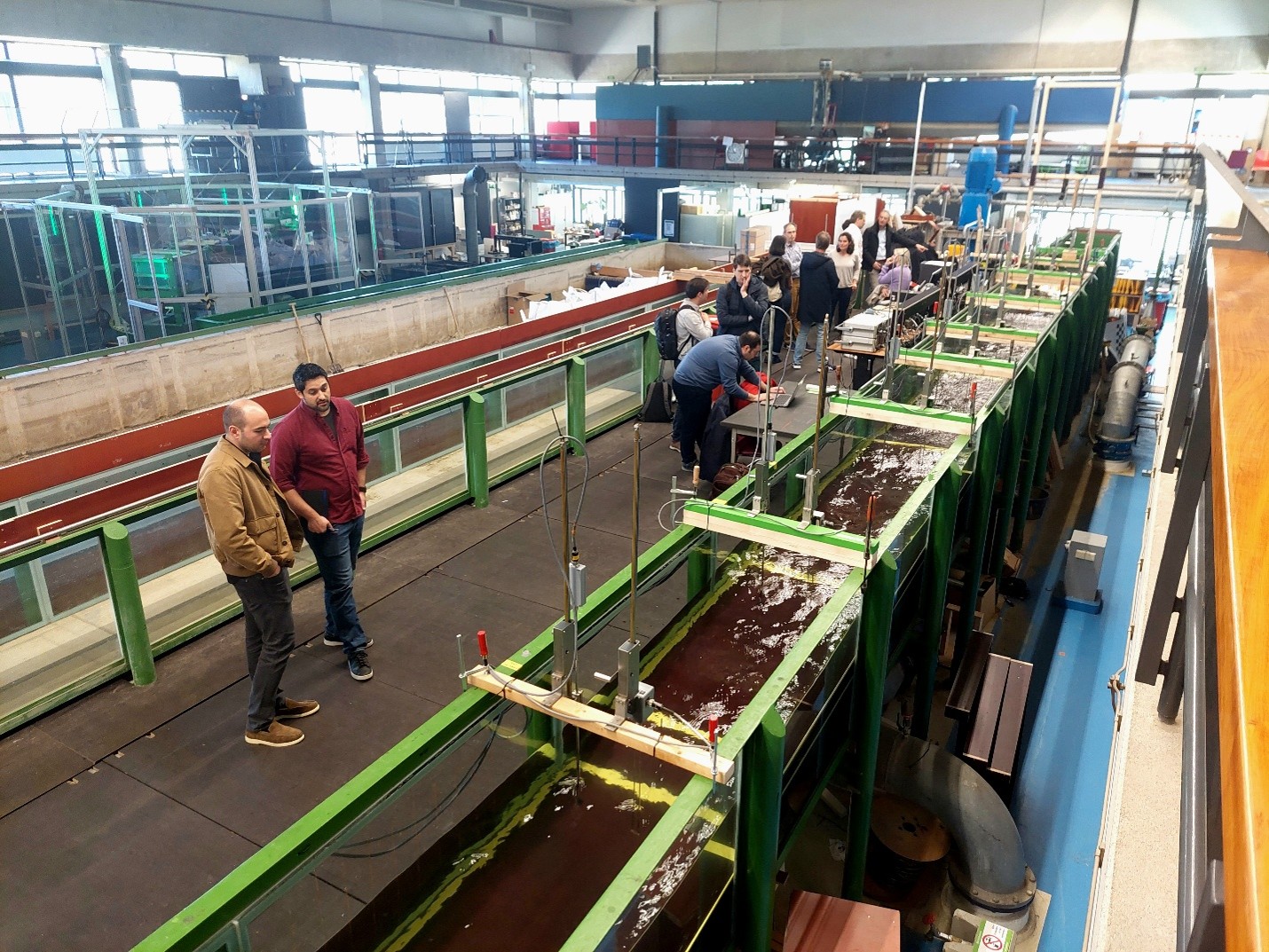
Wave overtopping is a critical factor in coastal safety. The experiments help improve our understanding of how hybrid coastal defences reduce overtopping during storms and provide valuable data for validating numerical models used in the design of future coastal protection systems.
Braunschweig: The protective role of dune vegetation
Healthy dunes are more than a pile of sand. Vegetation plays a vital role in stabilising sediments, reducing erosion and increasing the resilience of coastal landscapes.
At the Technische Universität Braunschweig, researchers investigate how different dune plant species and planting strategies influence the resistance of dunes to wave attack. In the wave flume, vegetated dune models are exposed to storm conditions to assess how vegetation affects erosion processes and contributes to the overall stability of the dune system.
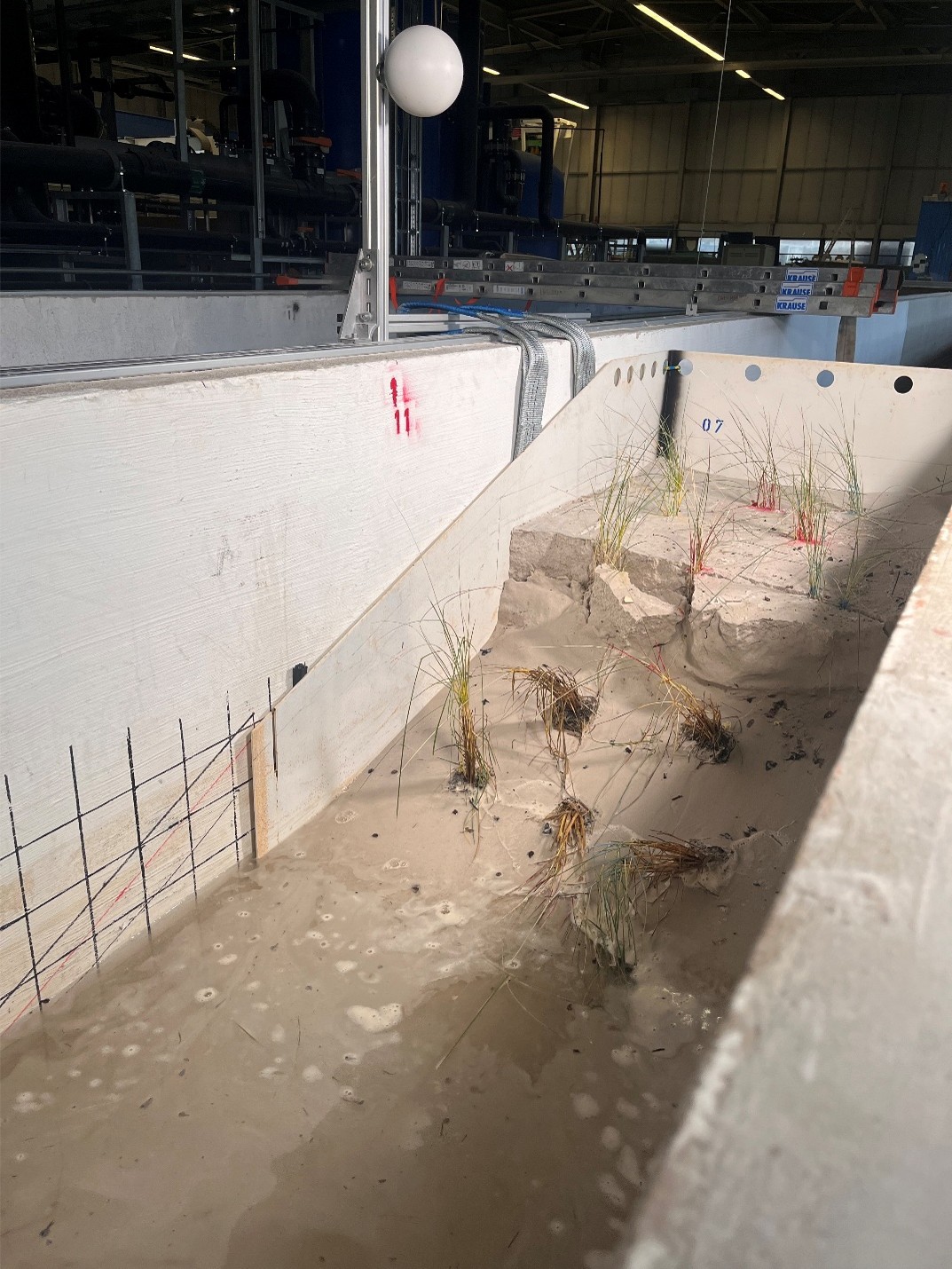
These experiments provide unique insights into the interaction between ecological and hydraulic processes, demonstrating how nature itself can strengthen coastal protection.
Three facilities, one integrated research approach
Although each wave flume investigates a different process, together they provide a comprehensive understanding of how nature-based coastal defences perform under extreme conditions. The experimental results from Antwerp, Delft and Braunschweig are combined with field observations, numerical modelling and digital twins to create an integrated picture of dune-dike behaviour.
This multidisciplinary approach lies at the heart of DuneFront. By combining expertise in hydraulics, sediment transport, ecology and coastal engineering, the project is developing the scientific knowledge needed to design more resilient and sustainable coastal protection systems.
The three wave flumes each contribute a vital piece of the puzzle. Together, they are helping researchers better understand the complex processes that shape our coasts and paving the way for innovative, nature-based solutions that will protect European coastlines in a changing climate.